AI-Human Interaction Design: The Foundation
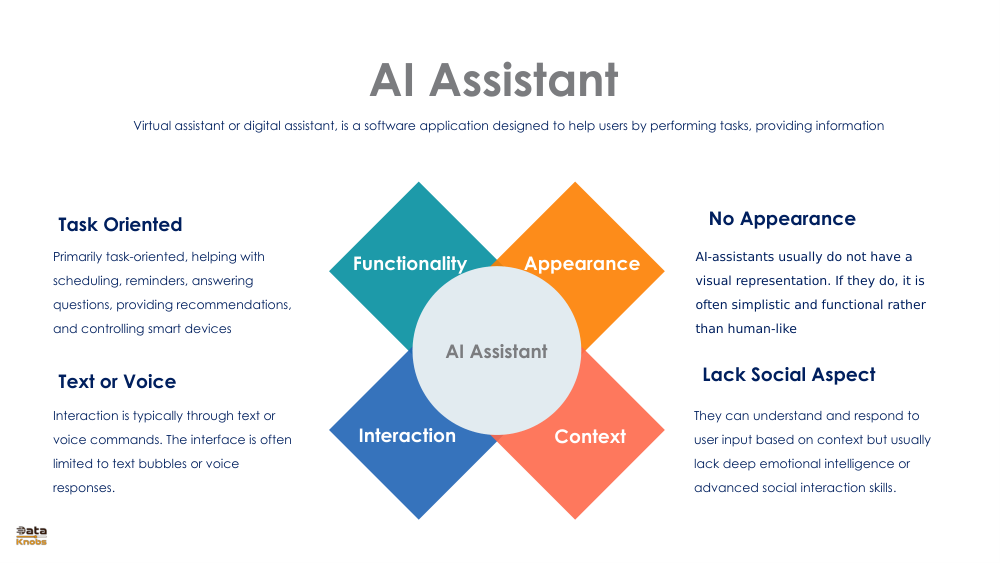
Designing digital humans and AI assistants requires adhering to natural human communication and interaction principles. AI systems should mimic human conversational norms and expectations when interacting with people, fostering natural, engaging, and trustworthy experiences instead of appearing robotic and artificial.
What is AI-Human Interaction Design?
Bridging the Gap Between AI and Humans
AI-Human interaction design involves creating interfaces and communication patterns that enable artificial intelligence systems to interact with humans in a natural, intuitive, and satisfying manner. This discipline extends beyond basic functionality to include emotional responses, contextual awareness, and managing detailed conversations.
The Core Challenge
The main obstacle lies in ensuring AI systems exhibit behaviors that match human conversational expectations. Over centuries, humans have developed intricate ways of communicating with one another, both verbally and non-verbally. Even when engaging with artificial intelligence, we unconsciously rely on these ingrained communication patterns. Creating digital humans that recognize and respect these expectations leads to enhanced interactions.
Why Cooperative Conversation Matters
The Foundation of Natural Interaction
Cooperative conversation forms the basis of seamless and effective human interaction. AI systems that adhere to cooperative conversation principles are perceived as more reliable, helpful, and engaging by users. Conversely, when these principles are disregarded, users may experience frustration without fully grasping the reason why.
✓ Key Advantages of Cooperative Design
- Creates experiences that feel natural and human-like
- Builds user trust and confidence in AI systems
- Improves task success and user satisfaction
- Increases engagement and user retention
- Reduces frustration and support needs
- Enables more complex and nuanced conversations
Cooperative Conversation & Grice's Maxims
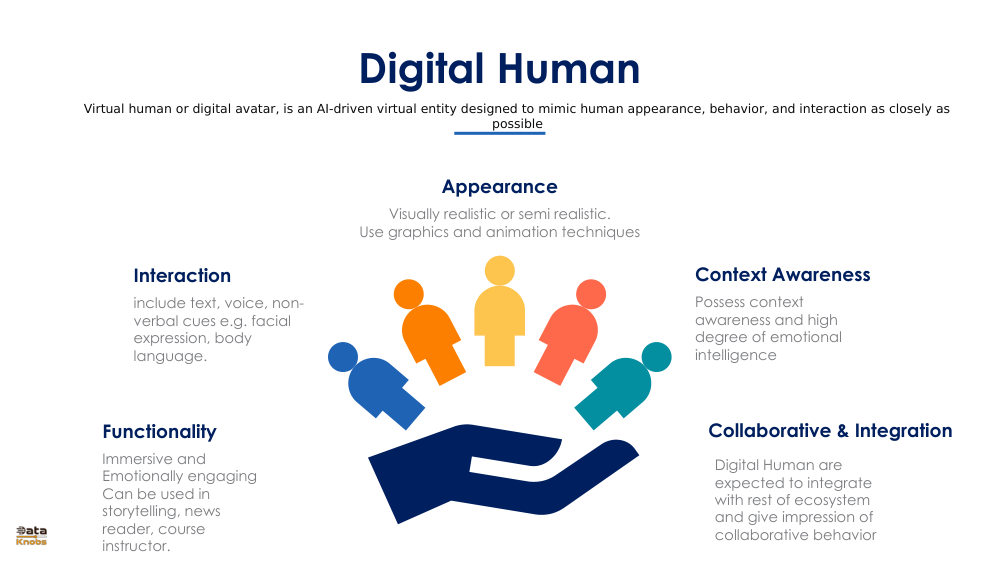
Paul Grice, an English philosopher, established the principle of cooperative conversation, which is crucial for comprehending human communication. His findings outline fundamental principles that are applicable to all languages and cultures, serving as valuable guidelines for designing AI systems.
Grice's Principle of Cooperative Conversation
The Core Principle
When communicating, it is universally expected to speak truthfully, be relevant, and be clear in any language and cultural context, which should also be considered in the design of AI systems.
The Four Maxims of Cooperative Conversation
1. Quality
Be truthful and informative. Avoid stating falsehoods or making unsupported claims; users rely on AI systems to be truthful and reliable, and violations of quality can severely impact trust.
2. Quantity
Provide appropriate amounts of information. Strive to provide just the right amount of information - enough to satisfy users' needs without overwhelming them. Balancing completeness and conciseness is key to ensuring user satisfaction.
3. Relevance
Stay on topic and address the actual question. Users anticipate that AI will comprehend their inquiries and concentrate on the specific subject at hand, providing pertinent information. It is important to contribute relevant information to the ongoing conversation.
4. Manner
Be clear and orderly in expression. Do not create confusion, vagueness, or unnecessary difficulty. Use language that is clear and easy for your audience to understand. Users anticipate comprehensible AI responses without any extra effort or uncertainty.
Advanced Concepts: Flouting and Implicatures
Understanding Flouting
Flouting Flouting a maxim in conversation is when a speaker openly violates it, making it clear they are doing so intentionally. For instance, someone might sarcastically say 'That's just great!' in a negative tone when something goes wrong, violating the Maxim of Quality.
Understanding Implicatures
Implicatures Implicatures are conclusions that listeners make when a speaker breaks the maxims. Rather than assuming the speaker is being uncooperative, listeners derive a deeper meaning from the words spoken. It is crucial for advanced digital human design to comprehend and handle implicatures effectively. AI systems should be mindful of how their breaches of maxims could be perceived.
Universal Principles Across Languages and Cultures
Key Insight: Universal Applicability
The universality of these four maxims makes them applicable to all languages and cultures, guiding effective communication in Mandarin in Beijing, Arabic in Cairo, or English in London. This quality also makes them perfect for developing AI systems that will be utilized worldwide.
✓ Implications for Digital Human Design
- Design for all four maxims, not just one or two
- Consider how apparent violations might be interpreted
- Be intentional about any maxim violations for effect
- Understand cultural differences in interpretation
- Test with diverse user populations
- Continuously refine based on user feedback
Digital Human Capabilities for Engaging Conversations
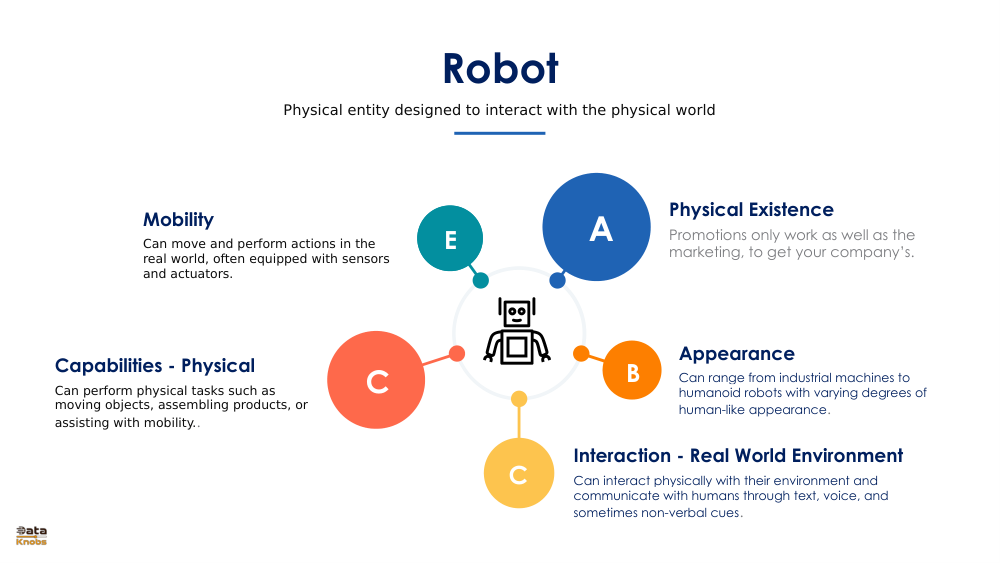
Digital humans are created to engage in conversations that mimic human interactions by incorporating various elements such as facial expressions, tone, context awareness, and complex reasoning to make the interactions feel genuine and emotionally intelligent.
Five Core Capabilities for Digital Humans
🗣️ Open-Ended Discussion
Digital humans are capable of engaging in lengthy, open-ended conversations that go beyond simple question and answer exchanges. They are able to maintain conversation threads, recall past points, and have discussions that continue to evolve and deepen over time, similar to how natural human conversations unfold and progress.
😊 Facial Expression
Digital individuals possess a facial structure and utilize appropriate facial expressions during conversations. Smiling during upbeat discussions, displaying empathy when tackling issues, and incorporating various emotional cues enhance the engagement of interactions. Non-verbal communication through facial expressions enriches the quality of conversations.
🎵 Tone of Voice
Digital humans are able to adjust their tone accordingly, being serious during important discussions, friendly during casual conversations, and empathetic when addressing concerns. This skill allows for interactions that are more emotionally appropriate and human-like.
🧠 Complex Reasoning
Digital humans are capable of complex reasoning and in-depth discussions, going beyond basic fact retrieval to offer nuanced analysis, consider various viewpoints, and tackle advanced inquiries. This allows for meaningful conversations that delve deeper than just surface-level questioning.
📋 Handle Complex Details
Digital humans are adept at handling intricate details without causing user overload. They have the ability to simplify complex information, offer gradual explanations, and assist users in grasping challenging subjects. By organizing details in a logical manner, they ensure accessibility for all users.
🤝 Human-Like Engagement
Digital humans are created to engage in human-like conversations that feel natural and satisfying, rather than transactional. The various capabilities work together to give users the experience of conversing with an intelligent partner, rather than simply querying a database.
How Capabilities Work Together
Individual Capabilities
- Facial expression conveys emotion
- Tone communicates attitude
- Context enables relevance
- Reasoning handles complexity
- Detail management aids clarity
Integrated Experience
- Multi-modal communication
- Emotionally intelligent interaction
- Contextual understanding
- Substantive conversations
- Natural engagement
Detailed Capability Descriptions
Open-Ended Discussion Capability
Long Context Management: Digital humans store extensive conversation logs, allowing for seamless discussions that refer back to previous messages and evolve over time. Users can easily recall earlier points without redundancy, creating a fluid and organic dialogue experience rather than disjointed interactions.
Example: In conversation 1, a user shares their project challenges, and in conversation 2, they refer back to those challenges by saying 'as previously discussed...' Advanced digital humans retain long-term context to respond seamlessly without the need for the user to repeat themselves.
Facial Expression Capability
Appropriate Emotional Display: Digital humans utilize facial expressions that correspond with the content and emotional context of the dialogue, displaying positive reactions for good news, concerned reactions for issues, and attentive reactions during conversations.
Implementation: Graphics and animation technologies allow for lifelike facial expressions, while machine learning algorithms anticipate suitable emotions based on dialogue context.
Tone of Voice Capability
Appropriate Vocal Expression: Digital humans can adjust their tone, pace, and emphasis in speech, appearing enthusiastic about engaging topics, soothing during comforting moments, and urgent when dealing with time-sensitive matters.
Implementation: Text-to-speech systems with emotional modulation or voice actors providing diverse recordings, ensuring a dynamic and engaging tone throughout.
Complex Reasoning Capability
Sophisticated Analysis: Digital humans have the ability to partake in detailed discussions, taking into account various viewpoints, navigating uncertainty, and offering logical explanations on intricate subjects. They are not confined to basic pattern recognition.
Implementation: Sophisticated language models, vast knowledge bases, and advanced reasoning systems. Capable of elucidating thought processes, recognizing uncertainty, and delving into subjects extensively.
Complex Detail Management
Information Architecture: Digital humans arrange intricate data in a hierarchical manner, prioritizing essential information while gradually revealing more details. They simplify complex ideas by breaking them down into manageable components.
Implementation: Simplifying complex information through clear design, progressive disclosure, and concise explanations without sacrificing accuracy.
Implementing Digital Human Design
Comprehending the principles and capabilities is important, but successfully implementing them demands focus on precise design and development practices.
Design Best Practices
✓ Consistent Personality Design
Create a distinct identity for your digital avatar by outlining their communication style, expertise, emotional traits, and boundaries. This coherence aids in forming realistic expectations and fostering trust with users.
✓ Multi-Modal Communication
Incorporate visual cues (facial expressions, body language), vocal elements (tone, pace, emotion), and textual components (word choice, organization) in communication. These channels complement each other, enhancing interpersonal connections.
✓ Context Awareness & Memory
Develop systems that can keep track of conversation history and context. It is crucial for digital humans to recall past discussions, refer back to previous points, and engage in coherent conversations, especially in open-ended discussions.
✓ Emotional Intelligence
Teach digital beings to identify emotions in user input and react accordingly. When users convey frustration, the digital being should show empathy. When they express excitement, the digital being should display enthusiasm.
✓ Honest Limitations
Be honest about the capabilities and limitations of digital humans. Instead of trying to conceal shortcomings, be transparent about them. This helps build trust and ensures users have realistic expectations.
Technical Implementation Considerations
Rendering & Graphics
Top-notch 3D character models with lifelike facial rigging facilitate accurate facial expressions. Real-time rendering permits interactive, dynamic expressions that correspond to dialogue. Animation systems should support seamless, authentic movements.
Voice & Speech
Sophisticated text-to-speech technology with emotional modulation, or professional voice actor recordings for top-notch user experiences. The quality of synthesis should be excellent to ensure seamless integration with the content, while tone variations should be appropriate for the conversation's subject and setting.
Language Understanding
NLP models that comprehend user intent, emotion, and context are essential for generating appropriate responses, selecting tone and expression, and facilitating coherent conversations.
Knowledge & Reasoning
The digital human must have access to knowledge bases and reasoning systems to engage in meaningful conversations, answer questions, explain concepts, and analyze information within its domain. Sophisticated language models enhance its reasoning capabilities.
Real-World Design Scenarios
Scenario 1: Educational Digital Human
Requirements: Simplify intricate subjects effectively, involve students, retain key concepts, accommodate various learning speeds.
Implementation: Encouraging exploration of questions from various perspectives. Effective communication for simplifying intricate ideas. Connecting emotionally with students through facial expressions and tone. Utilizing memory techniques to monitor student advancement and adjust difficulty levels.
Scenario 2: Customer Service Digital Human
Requirements: Address customer concerns with empathy, offer precise guidance, and resolve issues effectively or escalate as needed.
Implementation: Recognizing frustration or concern through emotional intelligence. Analyzing problems and determining solutions with complex reasoning. Understanding customer history and previous interactions for context awareness. Varying tone from sympathetic to encouraging.
Scenario 3: News Presenter Digital Human
Requirements: Deliver news in a clear manner, match emotional tone to story type, uphold professionalism, and captivate audience.
Implementation: Changing from a serious tone for important news to a more lighthearted one for human interest stories. Using facial expressions to convey emotions effectively. Clearly communicating complex information. Maintaining a consistent professional demeanor.
Advanced Concepts: Flouting, Implicatures & Design
Comprehending the ways in which digital humans can break conversational rules while still being cooperative is a complex design element that allows for more refined and nuanced interactions.
Strategic Use of Flouting
When Flouting Serves a Purpose
Cooperative conversations usually involve following certain rules, but there are instances where breaking these rules can convey significant messages. Humor often relies on breaking the Maxim of Manner by speaking unclearly or metaphorically, while irony breaks the Maxim of Quality by saying the opposite of what one truly believes. Digital beings that can strategically break these rules may be more captivating and refined.
Example: Humor in Digital Humans
User: "I've been working on this problem for hours."
Digital Human with flouting: Hours? That's, like, an insane amount of minutes!
Why it works: The digital person shows empathy towards the user's frustration by recognizing the time spent, injecting humor to ease the tension, and nurturing the conversational bond.
Example: Irony and Empathy
User: "The system crashed right when I finished my work."
Digital Human with irony: Oh terrible timing! Just what you didn't need today.
Why it works: The digital human is not claiming the crash is a positive thing, but rather using irony to show empathy and solidarity with the user's frustration, demonstrating an understanding of their feelings.
Managing Implicatures in Design
The Importance of Clear Implicatures
The user should easily grasp the intended implicature when a digital human violates a maxim. Ambiguity in flouting causes confusion, not engagement. Design must make intentional maxim violations clear and the intended message obvious.
✓ Designing for Clear Implicatures
- Make obvious when maxims are being deliberately flouted
- Ensure the intended meaning is clear from context
- Use consistent patterns so users understand the style
- Test with real users to verify understanding
- Don't be unclear when precision is important
- Match flouting style to the digital human's personality
The Future of Digital Human Design
Digital human design represents the frontier of AI-human interaction. Grounding these systems in Grice's maxims of truth, appropriateness, relevance, and clarity results in AI that communicates in a natural and effective manner.
The five essential skills - open-ended conversation, facial expressions, tone of voice, critical thinking, and attention to detail - collaborate to produce interactions that are realistic and captivating. Users engage in conversations with AI systems that not only provide information, but also understand and respond emotionally, engaging in meaningful interactions.
Grice's maxims are applicable worldwide due to their universality across languages and cultures. A digital person created in NYC can seamlessly engage with individuals in Tokyo, Cairo, and São Paulo, as the values of honesty, suitability, significance, and lucidity surpass cultural barriers.
With the rise of digital humans in education, customer service, entertainment, and various other sectors, the importance of perfecting interaction design grows significantly. Through the use of cooperative conversation principles, incorporation of various communication methods, and prioritizing emotional intelligence, we develop AI systems that users not only accept, but truly appreciate engaging with. This is the potential and impact of intentional digital human design.